Students find community alongside fresh produce at UW–Madison’s Campus Farm
Words by Ryan Kim
Photos by University Housing
When you think “farm to table,” a university dining market might not be the first thing that comes to mind. But here at UW–Madison, maybe it should be.
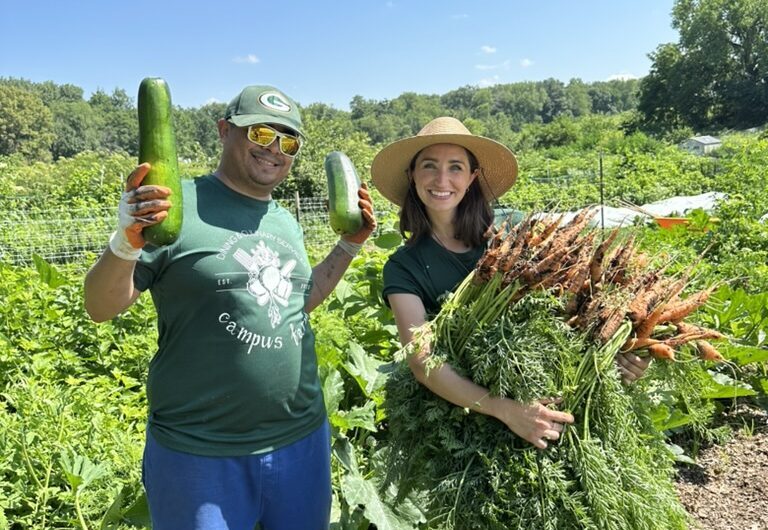
Established in 2023 by University Housing Dining and Culinary Services, the Dining Campus Farm has expanded rapidly, adding a new plot at the West Madison Agricultural Research Station in 2025. Today, the three-acre farm supplies fresh produce to campus dining markets and gives students opportunities to volunteer and learn about sustainable agriculture firsthand.
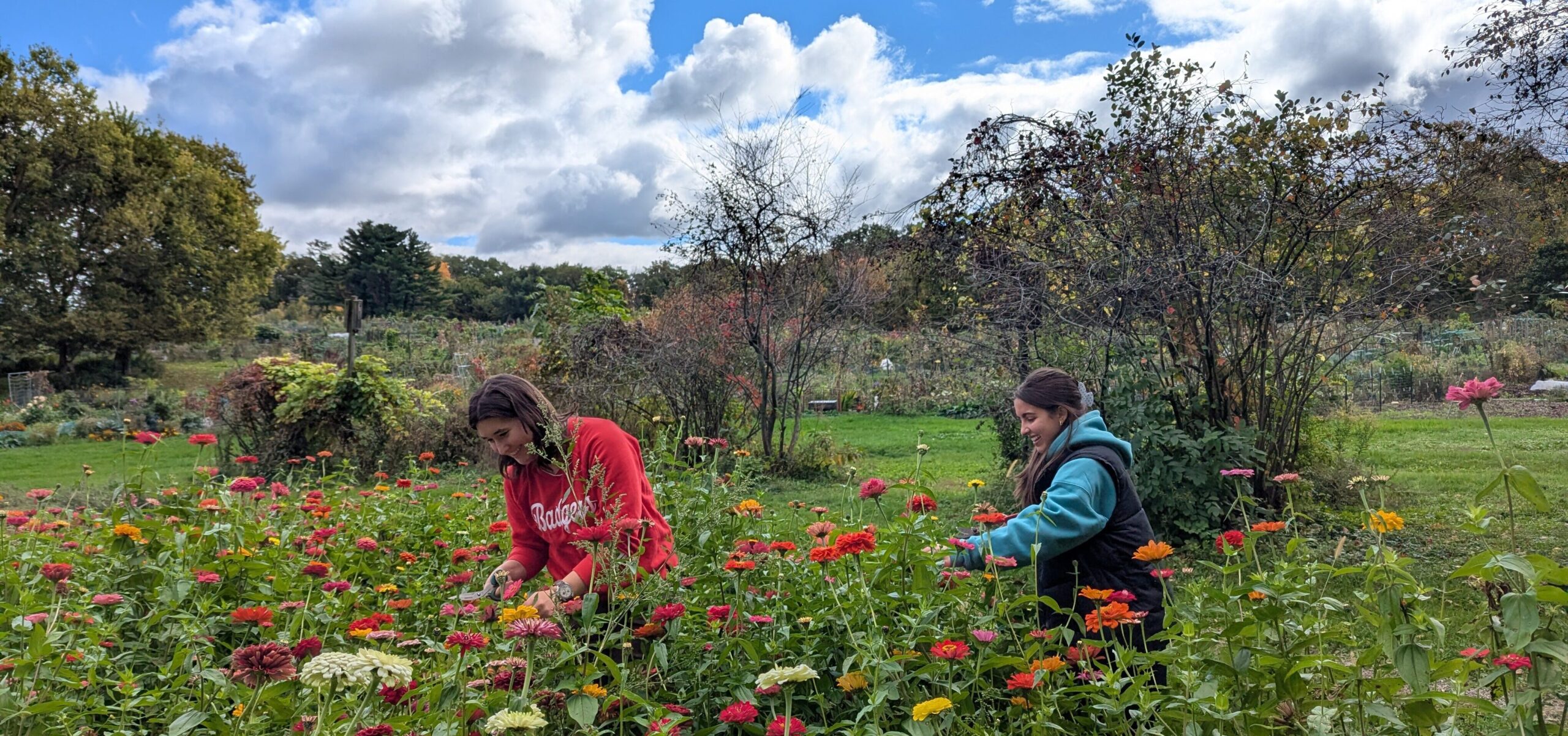
Malorie Garbe, UW–Madison’s housing sustainability coordinator, said it’s the community that makes the farm so special for her and others. “People often leave their phones behind,” Garbe said. “We’re just out in the field working, and there’s a sense of community that the space brings.”
For students drawn to sustainability and gardening, Garbe said the farm also offers a chance to step away from campus and connect with nature.
“It’s beautiful. It’s a space to breathe. It’s a space to disconnect from all the other things that folks might be going through,” Garbe said. “Just enjoying the community, the conversation, the learning opportunities, and the exposure to nature have all been really fun.”
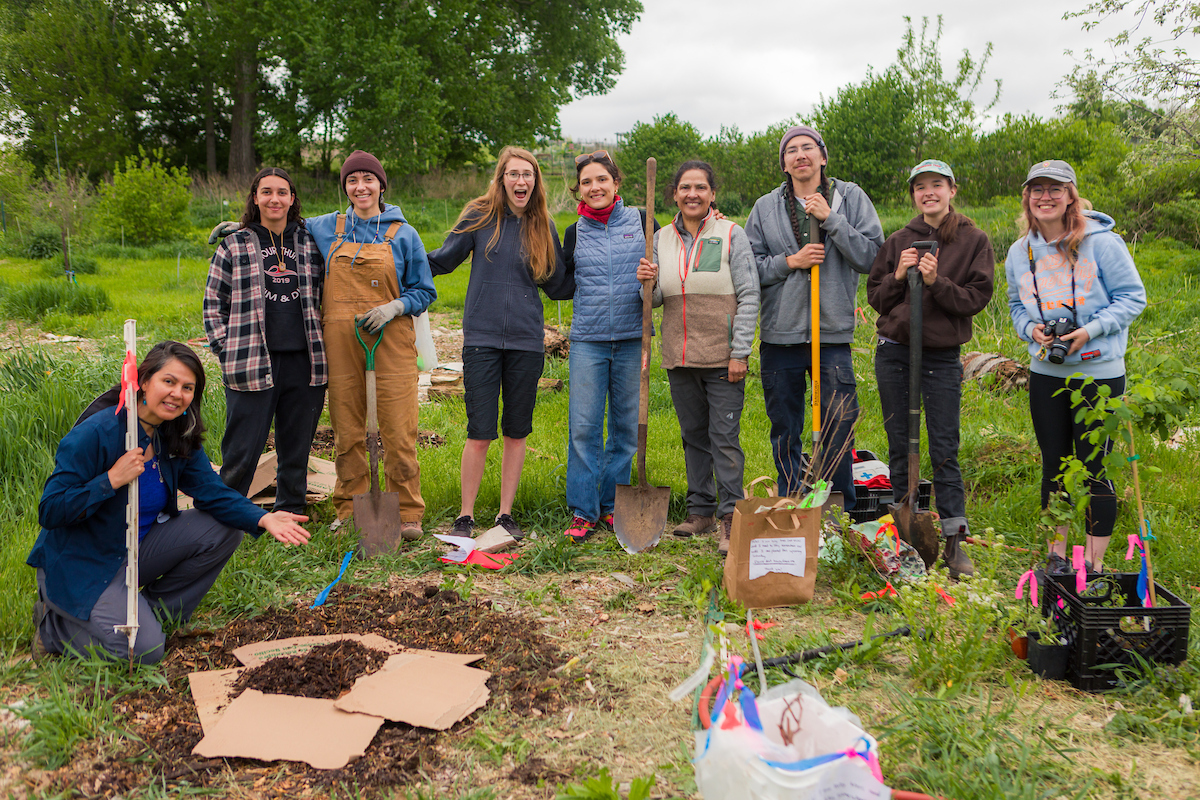
Several student groups volunteer on the Dining Campus Farm, including those involved with the GreenHouse Learning Community, which helps them maintain their garden plots and orchard.
In 2024, the Dining Campus Farm also worked with mechanical engineering students on an agrivoltaics prototype supported by UW–Madison’s Green Fund. Agrivoltaics combines farming and solar energy production on the same land. At the farm, panels shade greens while charging a battery that powers electric gardening tools. Through the project, Garbe said, the farm is learning how solar power might fit into a farm environment.
Garbe described the project as “an example of some innovation that’s happened” on the farm, adding that there have been “a lot of other cool experimentation as well.” For example, the farm is also testing various sustainable agriculture techniques and seed varieties to find what works best for its program and what dining markets can use most.
The farm collaborates with all dining markets on campus by contributing produce and herbs to the Bakery and Central Production Kitchen, which cooks soups, sauces, and other items for the dining markets.

The freshness of the farm’s produce makes a noticeable difference. Kenneth Gleed, the Unit Chef at Carson’s Market, said the Dining Campus Farm vegetables are picked when they’re ripe, setting them apart from produce from his other suppliers.
“It’s like seafood. If you live by the ocean and you catch a fish and eat it, it’s amazing,” Gleed said. “I mean, it’s comparing apples to oranges. It’s just impossible.”
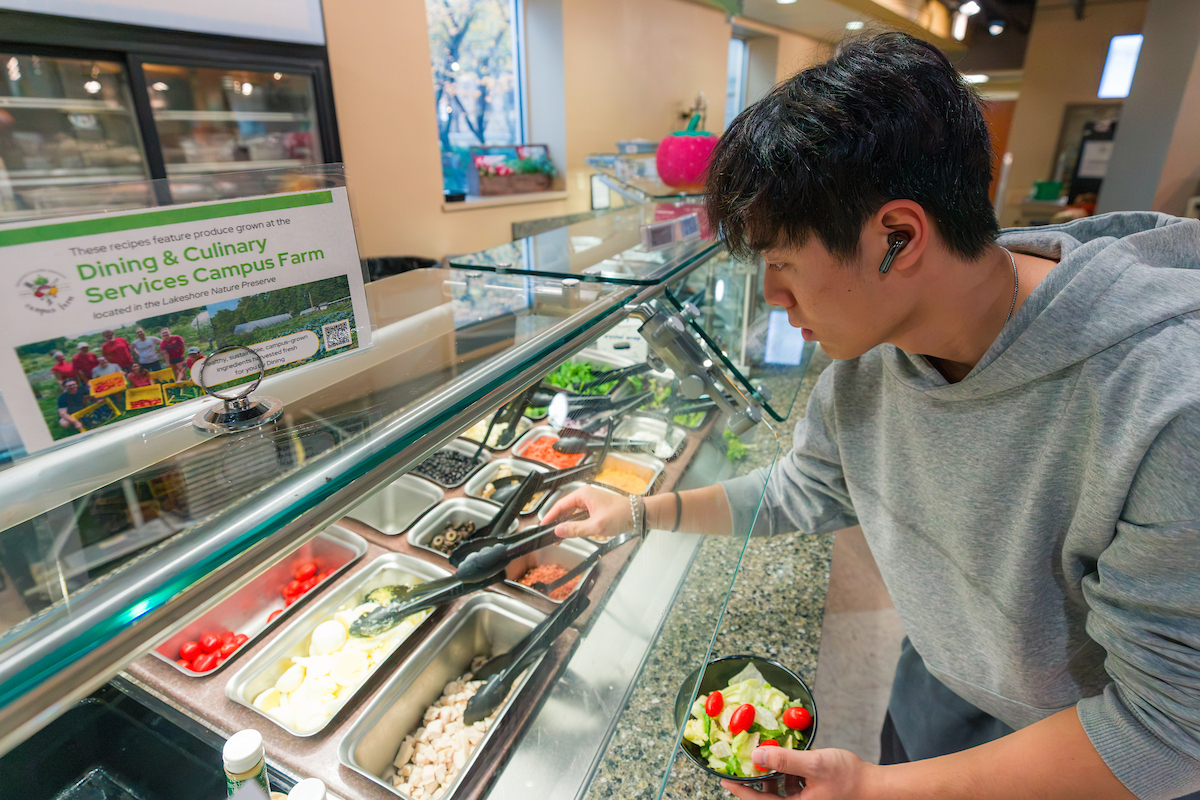
The farm’s produce primarily goes to markets like Rheta’s, Carson’s, and Liz’s, which can better feature the farm-fresh ingredients. “Those units have some flexibility to be able to work with what comes in and feature it in certain ways,” said Garbe. “All of the produce that we’re producing can go there and be featured in a recipe.”
Garbe sends the dining markets’ chefs a weekly list of available produce. After the chefs choose what the kitchen can use and how much to take, the Dining Campus Farm volunteers and staff harvest the vegetables and deliver them.
Gleed said that over the past two years, the Campus Farm has optimized its crops to better align with menus.
“Now they’ve gotten more specific, so it helps us a lot more with what they’re growing versus what they did originally,” Gleed said. For example, the farm now grows more tomatoes, which the kitchen always uses in places like the salad bar.
Nadia Eull, the student sustainability coordinator assistant for Housing Sustainability, said she’s worked with the dining markets to help consider how vegetables could be best utilized in recipes while providing feedback for next season’s selections. She also helps with outreach and events, helping students learn and celebrate where their food comes from.
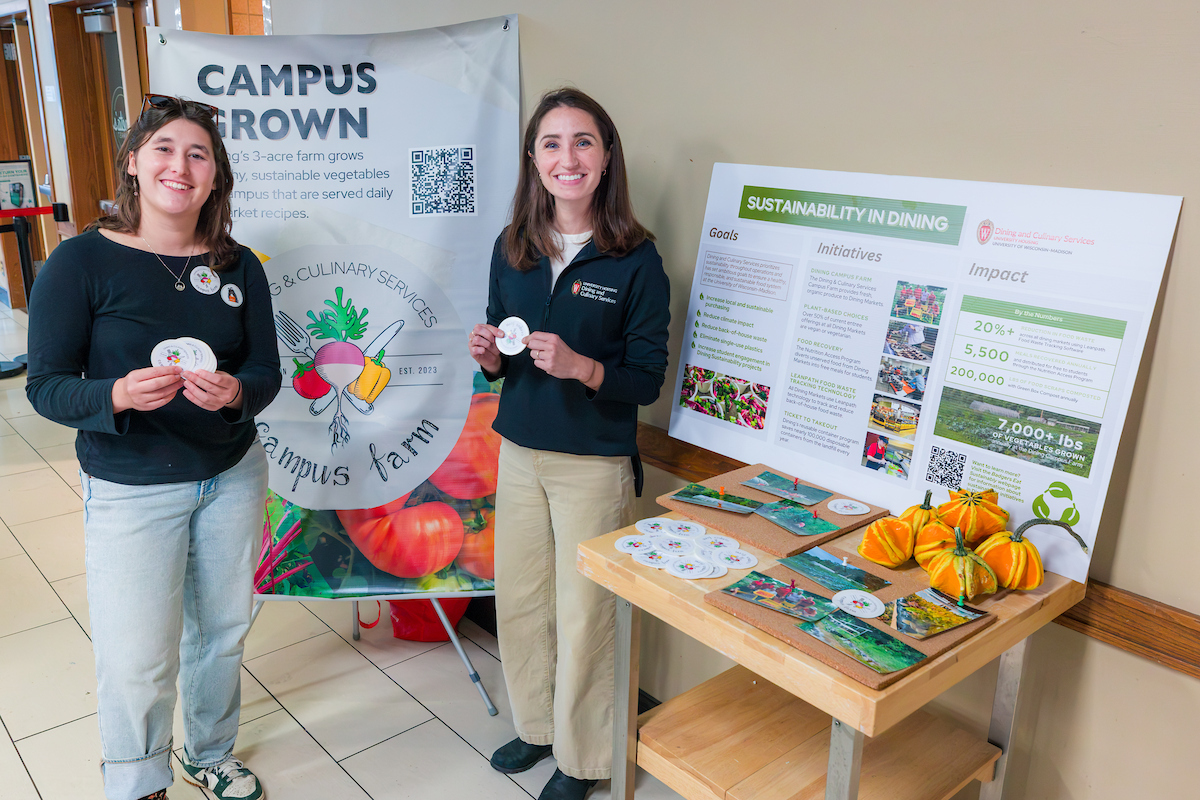
On October 28th, Rheta’s Market hosted its second annual Local Produce Dinner showcasing kale, beets, collard greens, and other vegetables from the Dining Campus Farm and other local growers.
Aliyah Thompson, a freshman at UW–Madison, found the Local Produce Dinner through an events page. After trying some of the vegetables, Thompson said they tasted fresh.
“Usually I don’t go to this dining market, but I thought the event was pretty cool,” Thompson said. “It was really interesting how they had local produce because that’s not always found in a college dining markets.”
In addition to the farm, Nadia is also working on the Eat Local Wisconsin initiative to better highlight the many local and sustainable ingredients that Dining sources throughout the year. To hear more about the initiative, students can look on the Badgers Eat Sustainably website for more information. In addition, the dining markets have put up signs or small tags to tell students when the Dining Campus Farm’s vegetables were used.
“It’s part of our housing sustainability goals, so it’s not a temporary thing that we’re doing for these couple months. It’s something that is included in our goals overall as being a sustainable university dining service,” Eull said.
Eull said the Dining Campus Farm is an important part of campus culture.
“Being a student and knowing that we have a campus farm makes me feel like the university cares about local foods and about the environment,” Eull said.