My Green Lab Certification Program
- How much does it cost? $0 (Free to labs that complete entire program)
- Who’s eligible? Laboratories at the University of Wisconsin–Madison
- When’s the deadline? Register by June 30 each year (Max 50 labs per session)
- How many years is the certification valid? 2 years
- What is the current version of the program? Version 2.0

Register by June 30th
Register for the My Green Lab Certification Program v2.0 using the link above.
Program Summary
| Dates | Milestone | Description |
|---|---|---|
| May 1 - Jun 30 | Registration | Interested UW–Madison laboratories must complete the registration form by June 30th to participate in the upcoming program. The first 50 laboratories to sign-up will be enrolled in the program. |
| Jul 1 - Jul 15 | Lab Setup | An Office of Sustainability Intern will be assigned as your Project Manager. Your Project Manager will setup your virtual workspaces. A Microsoft Team will be created and setup your lab in the My Green Lab Certification Hub. |
| Jul 15 - Aug 31 | Kickoff Meeting | The Project Manager will schedule a mandatory on-site kickoff meeting with the Lab Leader(s) during this time frame. |
| Jul 15 - Aug 31 | Assessment Tool | During the Kickoff Meeting, the Project Manager will complete the Assessment Tool with the Lab Leader(s). |
| Jul 15 - Aug 31 | Impact Calculator | During the Kickoff Meeting, the Project Manager will complete the Impact Calculator with the Lab Leader(s). |
| Sept 1 - Oct 1 | Baseline Engagement Survey | Lab Leader(s) and lab personnel will complete the 12-minute lab-wide Baseline Engagement Survey. Lab Leaders(s) will submit for Baseline Review. |
| Note: For laboratories under 10 members, all members must complete the assessment. For laboratories with 10 or more members, a minimum of 50% of the members must complete the assessment. | ||
| Oct 2 - Oct 15 | Baseline Assessment Review | The My Green Lab organization will review the Baseline Assessment submission. Lab will receive a feedback report and presentation. |
| Oct 16 - Nov 15 | Action Tracker | The project manager will create an action tracker in your lab's virtual workspace. The action tracker will allow your lab members to prioritize which sustainable lab practices the group will undertake. |
| Oct 16 - Nov 15 | Site Visit | The project manager will setup a site visit to review the Action Tracker and perform an optional walkthrough of your laboratory. Please budget a minimum of 1.5 hours. |
| Oct 16 - Feb 28 | Implementation | Lab members will access support resources, execute targeted improvement strategies, and implement operational / behavioral changes that are selected in the Action Tracker. |
| Mar 1 - Mar 21 | Reassessment | The My Green Lab organization will email a reassessment to each lab member. The re-assessment takes up to 12-minutes to complete. |
| Note: For laboratories under 10 members, all members must complete the reassessment. For laboratories with 10 or more members, a minimum of 50% of the members must complete the reassessment. | ||
| Mar 22 - Apr 15 | Certification | The My Green Lab organization will assign a certification based on your reassessment score. |
| Apr 16 - Apr 30 | Communications | The My Green Lab organization will issue a certificate to display at your laboratory and a virtual badge to display on your website. The Office of Sustainability will update its webpage and issue University-wide communications for your accomplishment. |
| +2 years | Recertification | The My Green Lab Certification will be valid for 2 years. You are encouraged to reapply for the My Green Lab Certification program because laboratory sustainability is a dynamic and evolving topic— new technologies and products can redefine best practices and opportunities. My Green Lab reviews and updates its programs periodically. |
Levels of Certification
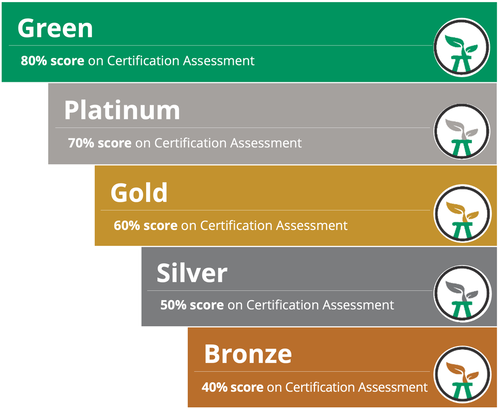
Certified Labs
More Opportunities
My Green Lab Ambassador Program
The My Green Lab Ambassador Program is designed for scientists and laboratory professionals who are motivated to encourage their lab to be more sustainable. This free, online learning program will provide you with a quick introduction to lab sustainability and ideas for how sustainable actions can be implemented at your organization. By becoming a My Green Lab Ambassador you will be able to jumpstart your lab’s journey into sustainability.
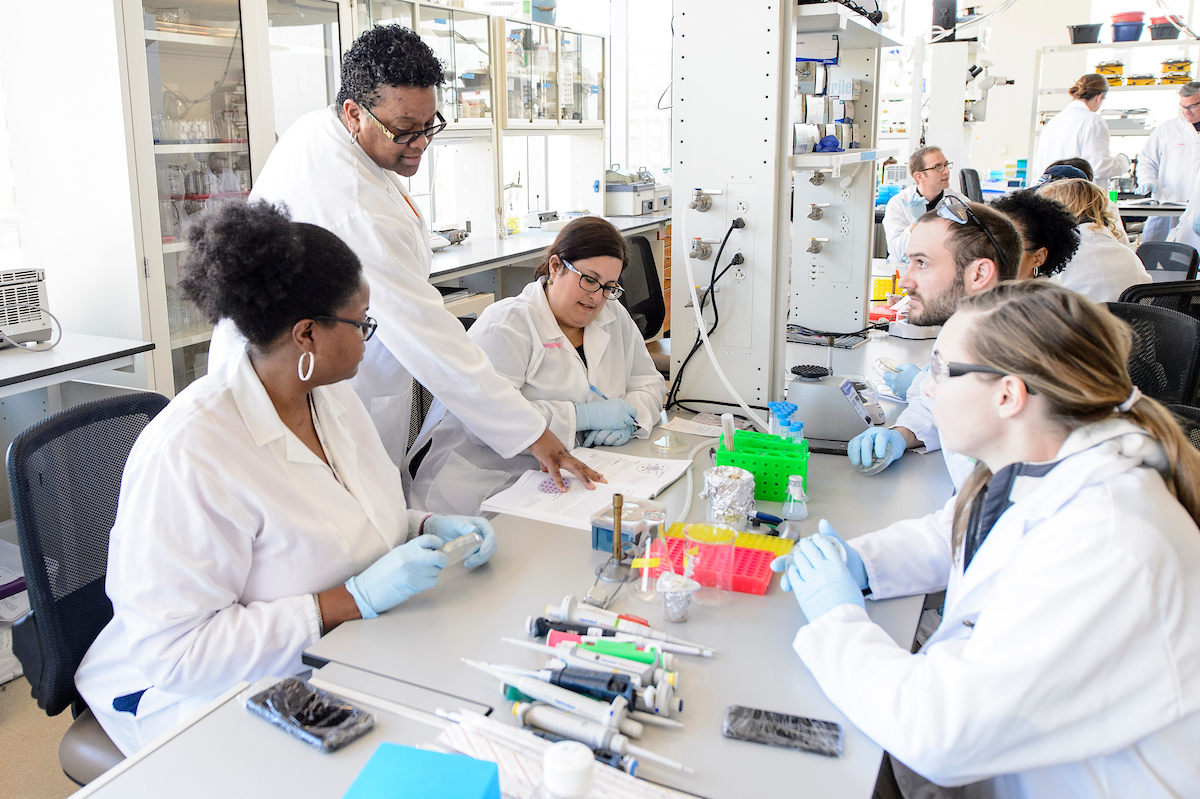
Lab Management – Community of Practice
Community driven best practices for lab management professionals at UW–Madison. Communities of practice serve many purposes. Collaborate with colleagues who share similar challenges. Share your expertise. Join us to discuss ways to optimize lab and core success. This community is for anyone who is in a lab management role including research labs, core labs and instructional labs.
My Green Lab Freezer Challenge
The My Green Lab Freezer Challenge is a free, annual competition for laboratories held virtually between January and June every year. The Freezer Challenge empowers labs to adopt smarter, more sustainable cold storage practices. By optimizing storage methods and reducing energy consumption, the program helps labs minimize their environmental impact and save costs, while improving the efficiency of scientific work.