My Green Lab Certification Program Seeks More Early Adopters
Over the last three years, 21 labs on the UW–Madison campus have committed to becoming more sustainable by limiting waste, reducing energy consumption, and using greener chemicals. Through the Office of Sustainability (OS), these labs have completed the My Green Lab Certification Program to reduce their environmental impact and become early adopters of a system in which scientific research can be made greener. Last year, 8 labs completed the process:
 For the interns, the value of the program is two-fold: it’s a learning opportunity for them that also directly contributes to improving sustainability on campus. Vibha described the program as very close to her heart and explained that it’s exciting to watch labs take the initiative and be in a position to provide resources and direction on how to concretely implement those changes. Caroline felt similarly, saying, “From a student perspective, it’s cool to see labs care about this. As a student, it’s good to come in and see labs interested in sustainability.”
Program leads and project managers both emphasized the need for more program adopters. Since its inception, there’s been a gradual uptick in the number of labs that complete the process, but still significantly below OS’ target amount: 50 labs a year. The team behind My Green Lab employs a range of outreach methods, including email, flyers, social media, and personal outreach. Caroline argues that “word of mouth” is most effective, an idea reinforced by Tim admitting to a “hunch” that most labs that sign up contain a couple of people who are already really interested in sustainability.
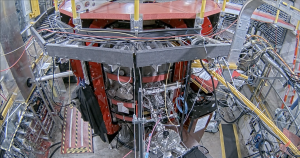
One such person is Benjamin Kujak-Ford, laboratory lead from the Pegasus-III Experiment, who describes himself as a “recycler at heart.” Ben was extremely interested in the program and the opportunities it offered for greener research, despite the engineering lab being a “dubious fit for the program.” After completing the process and earning a Silver certification, Ben said he wished there was a better “expansion opportunity” with sustainability programs, even though he was ultimately glad to have been involved. This sentiment is echoed by Caroline, who said, despite her best efforts, “some labs are trickier than others.” Despite its challenges, Ben argues that it’s a valuable space for students to learn. It provides OS interns like Caroline and Vibha a hands-on experience and fosters engagement between students, faculty, and staff.
For the interns, the value of the program is two-fold: it’s a learning opportunity for them that also directly contributes to improving sustainability on campus. Vibha described the program as very close to her heart and explained that it’s exciting to watch labs take the initiative and be in a position to provide resources and direction on how to concretely implement those changes. Caroline felt similarly, saying, “From a student perspective, it’s cool to see labs care about this. As a student, it’s good to come in and see labs interested in sustainability.”
Program leads and project managers both emphasized the need for more program adopters. Since its inception, there’s been a gradual uptick in the number of labs that complete the process, but still significantly below OS’ target amount: 50 labs a year. The team behind My Green Lab employs a range of outreach methods, including email, flyers, social media, and personal outreach. Caroline argues that “word of mouth” is most effective, an idea reinforced by Tim admitting to a “hunch” that most labs that sign up contain a couple of people who are already really interested in sustainability.
One such person is Benjamin Kujak-Ford, laboratory lead from the Pegasus-III Experiment, who describes himself as a “recycler at heart.” Ben was extremely interested in the program and the opportunities it offered for greener research, despite the engineering lab being a “dubious fit for the program.” After completing the process and earning a Silver certification, Ben said he wished there was a better “expansion opportunity” with sustainability programs, even though he was ultimately glad to have been involved. This sentiment is echoed by Caroline, who said, despite her best efforts, “some labs are trickier than others.” Despite its challenges, Ben argues that it’s a valuable space for students to learn. It provides OS interns like Caroline and Vibha a hands-on experience and fosters engagement between students, faculty, and staff.
 On the other end of the spectrum, Erica Shu from the Biochemistry Teaching Lab found the process to be relatively smooth. She found out about the program through a poster on a bulletin board, and her interest was piqued. Erica believes “a lot of labs will be interested” in the program, since even the assessment helps labs understand where they are and how to improve their sustainability. In particular, she found the resources the program offers to be extremely helpful. The diversity in experiences with the program suggests that some labs are naturally better fits with the program— wet labs, with their physical samples like liquids, chemicals, and biological matter, requiring specialized equipment and safety protocols, might benefit more from the program than dry labs.
If you know someone whose lab would be a good fit for the program, don’t hesitate to connect them with the Office of Sustainability. The My Green Lab Certification Program offers valuable insights and actionable strategies for any UW–Madison lab looking to enhance its sustainability efforts, regardless of its current practices. We strongly encourage all labs to register for this free program by August 15th to gain access to expert guidance and contribute to a greener campus. Participating not only helps your lab identify and implement more sustainable operations but also connects you with a community dedicated to environmental stewardship.
By: Laleh Ahmad
On the other end of the spectrum, Erica Shu from the Biochemistry Teaching Lab found the process to be relatively smooth. She found out about the program through a poster on a bulletin board, and her interest was piqued. Erica believes “a lot of labs will be interested” in the program, since even the assessment helps labs understand where they are and how to improve their sustainability. In particular, she found the resources the program offers to be extremely helpful. The diversity in experiences with the program suggests that some labs are naturally better fits with the program— wet labs, with their physical samples like liquids, chemicals, and biological matter, requiring specialized equipment and safety protocols, might benefit more from the program than dry labs.
If you know someone whose lab would be a good fit for the program, don’t hesitate to connect them with the Office of Sustainability. The My Green Lab Certification Program offers valuable insights and actionable strategies for any UW–Madison lab looking to enhance its sustainability efforts, regardless of its current practices. We strongly encourage all labs to register for this free program by August 15th to gain access to expert guidance and contribute to a greener campus. Participating not only helps your lab identify and implement more sustainable operations but also connects you with a community dedicated to environmental stewardship.
By: Laleh Ahmad
- Biochemistry Teaching Lab

The Biochemistry Teaching Lab
- Fluid Mechanics in Environmental Processes Group
- Gernsbacher Lab
- Influenza Research Institute
- Magnetic Resonance Laboratory
- Pegasus-III Experiment
- Zhu-Barker Soil Biogeochemistry Lab
- Smith Lab
The Green Labs intern team for 2024-2025. From left to right: Audrey Davies, Vibha Srinivasan, Chandler Wells, Ian Patch. (Not Pictured: Caroline Arciszewski, Bailey Tomsich)
Some of the equipment in a dry lab, like the Pegasus-III Experiment lab