Cultivating Resilience: How Chris Kucharik is Transforming Agriculture Amid Climate Change
This article, by Rusal Ferus, is part of a series highlighting members of the Office of Sustainability’s Experts Database. In a collaboration with instructor Hannah Monroe’s course, LSC 561: Writing Science for the Public, students interviewed campus sustainability experts and produced short feature stories.
Climate change is stressing agriculture in Wisconsin and across the country. Recently, a 2021 assessment from the Wisconsin Initiative for Climate Impacts reports that increasing extreme rain and heat events disturb important topsoil. However, current conservation practices to save topsoil have become less effective. As a consequence, topsoil and nutrients runoff, polluting waterways and causing crop loss.
This intersection of agriculture and meteorology is the gap UW–Madison agronomy professor and Nelson Institute affiliate Chris Kucharik fills in climate change research. Specializing in interdisciplinary research, Kucharik and his lab work at the intersection of crop, water, and energy, where they are experts in piecing together the dynamic interactions between our natural and agricultural land and weather patterns.
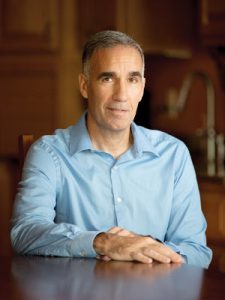 Growing up, Kucharik was fascinated with weather and intended to be a meteorologist. His love led him to the atmospheric sciences department as an undergrad at UW–Madison. However, his academic journey took an unexpected turn.
Despite his original intention, Kucharik’s current home is in the Agronomy department, which studies crop and soil management.
However, thirty-five years ago, as an atmospheric science undergrad, he would not have known what agronomy was if you had asked.
“When I came [to UW–Madison], I was studying to be a meteorologist,” said Kucharik. “So, connecting weather, climate shocks, and extreme weather events to producing food or what it does to dumping a bunch of phosphorus into Lake Mendota…all the way to how people are affected in urban [environments] with extreme heat. To me, there’s always sort of a weather and meteorology connection to these questions.”
During his PhD, his advisor John Norman, involved him in more projects that integrated a more interdisciplinary approach to research and problem solving. One such project was the Boreal Ecosystem-Atmosphere Study (BOREAS). He and the research group investigated the interactions between carbon, water, and energy cycles between forests and the atmosphere. This deep dive into how systems interact between the land and atmosphere set him down a path he still follows to this day.
Kucharik’s interdisciplinary path led him to have a dual appointment in the Nelson Institute of Environmental Studies, which champions integrative approaches to solving environmental problems. To him, it makes sense to bring different disciplines together.
“[Back then] we weren’t really talking about extreme [weather] events and their impacts, but as time has gone on, I’ve incorporated more ecology and biology into my background,” said Kucharik. “It became apparent, ‘oh it’s a natural fit to connect those types of things’ because it’s at the forefront of society and our problems.”
With the uncertainty of climate change and extreme weather events, it is vital to understand how climate change impacts crop production. Kucharik’s main goal is to understand that uncertainty by modeling different nutrient and water cycles, and collaborating with other researchers and farmers to update management practices.
He plans to integrate plant breeding and genetics into agroecosystem models to simulate how crops like corn, potatoes, and cranberries respond to changing weather conditions. Kucharik wants to account for real-life planting practices with modified crops and how they can survive in different climate and weather conditions, hoping to influence and inform policy from the local to the federal government.
Understanding how climate change will impact our crops and food supply is crucial for future sustainability. Without this knowledge, we cannot develop resilient agricultural systems capable of withstanding the challenges posed by a changing climate. Kucharik’s work is vital in bridging the gap between climate science and practical agricultural solutions, ensuring that we can adapt to and mitigate the effects of climate change.
“You know you, your children or their children, you want them to have a better life and to not worry about health risks associated with water quality or that there’s always going to be cheap and bountiful food…and less shocks to your system and your budget,” said Kucharik. “This work helps us solve the environmental consequences of farming the planet…We have to help farmers figure these things out [for a sustainable and resilient future].”
Growing up, Kucharik was fascinated with weather and intended to be a meteorologist. His love led him to the atmospheric sciences department as an undergrad at UW–Madison. However, his academic journey took an unexpected turn.
Despite his original intention, Kucharik’s current home is in the Agronomy department, which studies crop and soil management.
However, thirty-five years ago, as an atmospheric science undergrad, he would not have known what agronomy was if you had asked.
“When I came [to UW–Madison], I was studying to be a meteorologist,” said Kucharik. “So, connecting weather, climate shocks, and extreme weather events to producing food or what it does to dumping a bunch of phosphorus into Lake Mendota…all the way to how people are affected in urban [environments] with extreme heat. To me, there’s always sort of a weather and meteorology connection to these questions.”
During his PhD, his advisor John Norman, involved him in more projects that integrated a more interdisciplinary approach to research and problem solving. One such project was the Boreal Ecosystem-Atmosphere Study (BOREAS). He and the research group investigated the interactions between carbon, water, and energy cycles between forests and the atmosphere. This deep dive into how systems interact between the land and atmosphere set him down a path he still follows to this day.
Kucharik’s interdisciplinary path led him to have a dual appointment in the Nelson Institute of Environmental Studies, which champions integrative approaches to solving environmental problems. To him, it makes sense to bring different disciplines together.
“[Back then] we weren’t really talking about extreme [weather] events and their impacts, but as time has gone on, I’ve incorporated more ecology and biology into my background,” said Kucharik. “It became apparent, ‘oh it’s a natural fit to connect those types of things’ because it’s at the forefront of society and our problems.”
With the uncertainty of climate change and extreme weather events, it is vital to understand how climate change impacts crop production. Kucharik’s main goal is to understand that uncertainty by modeling different nutrient and water cycles, and collaborating with other researchers and farmers to update management practices.
He plans to integrate plant breeding and genetics into agroecosystem models to simulate how crops like corn, potatoes, and cranberries respond to changing weather conditions. Kucharik wants to account for real-life planting practices with modified crops and how they can survive in different climate and weather conditions, hoping to influence and inform policy from the local to the federal government.
Understanding how climate change will impact our crops and food supply is crucial for future sustainability. Without this knowledge, we cannot develop resilient agricultural systems capable of withstanding the challenges posed by a changing climate. Kucharik’s work is vital in bridging the gap between climate science and practical agricultural solutions, ensuring that we can adapt to and mitigate the effects of climate change.
“You know you, your children or their children, you want them to have a better life and to not worry about health risks associated with water quality or that there’s always going to be cheap and bountiful food…and less shocks to your system and your budget,” said Kucharik. “This work helps us solve the environmental consequences of farming the planet…We have to help farmers figure these things out [for a sustainable and resilient future].”
Growing up, Kucharik was fascinated with weather and intended to be a meteorologist. His love led him to the atmospheric sciences department as an undergrad at UW–Madison. However, his academic journey took an unexpected turn.
Despite his original intention, Kucharik’s current home is in the Agronomy department, which studies crop and soil management.
However, thirty-five years ago, as an atmospheric science undergrad, he would not have known what agronomy was if you had asked.
“When I came [to UW–Madison], I was studying to be a meteorologist,” said Kucharik. “So, connecting weather, climate shocks, and extreme weather events to producing food or what it does to dumping a bunch of phosphorus into Lake Mendota…all the way to how people are affected in urban [environments] with extreme heat. To me, there’s always sort of a weather and meteorology connection to these questions.”
During his PhD, his advisor John Norman, involved him in more projects that integrated a more interdisciplinary approach to research and problem solving. One such project was the Boreal Ecosystem-Atmosphere Study (BOREAS). He and the research group investigated the interactions between carbon, water, and energy cycles between forests and the atmosphere. This deep dive into how systems interact between the land and atmosphere set him down a path he still follows to this day.
Kucharik’s interdisciplinary path led him to have a dual appointment in the Nelson Institute of Environmental Studies, which champions integrative approaches to solving environmental problems. To him, it makes sense to bring different disciplines together.
“[Back then] we weren’t really talking about extreme [weather] events and their impacts, but as time has gone on, I’ve incorporated more ecology and biology into my background,” said Kucharik. “It became apparent, ‘oh it’s a natural fit to connect those types of things’ because it’s at the forefront of society and our problems.”
With the uncertainty of climate change and extreme weather events, it is vital to understand how climate change impacts crop production. Kucharik’s main goal is to understand that uncertainty by modeling different nutrient and water cycles, and collaborating with other researchers and farmers to update management practices.
He plans to integrate plant breeding and genetics into agroecosystem models to simulate how crops like corn, potatoes, and cranberries respond to changing weather conditions. Kucharik wants to account for real-life planting practices with modified crops and how they can survive in different climate and weather conditions, hoping to influence and inform policy from the local to the federal government.
Understanding how climate change will impact our crops and food supply is crucial for future sustainability. Without this knowledge, we cannot develop resilient agricultural systems capable of withstanding the challenges posed by a changing climate. Kucharik’s work is vital in bridging the gap between climate science and practical agricultural solutions, ensuring that we can adapt to and mitigate the effects of climate change.
“You know you, your children or their children, you want them to have a better life and to not worry about health risks associated with water quality or that there’s always going to be cheap and bountiful food…and less shocks to your system and your budget,” said Kucharik. “This work helps us solve the environmental consequences of farming the planet…We have to help farmers figure these things out [for a sustainable and resilient future].”