Sustainability at UW–Madison: 2024–25 Highlights
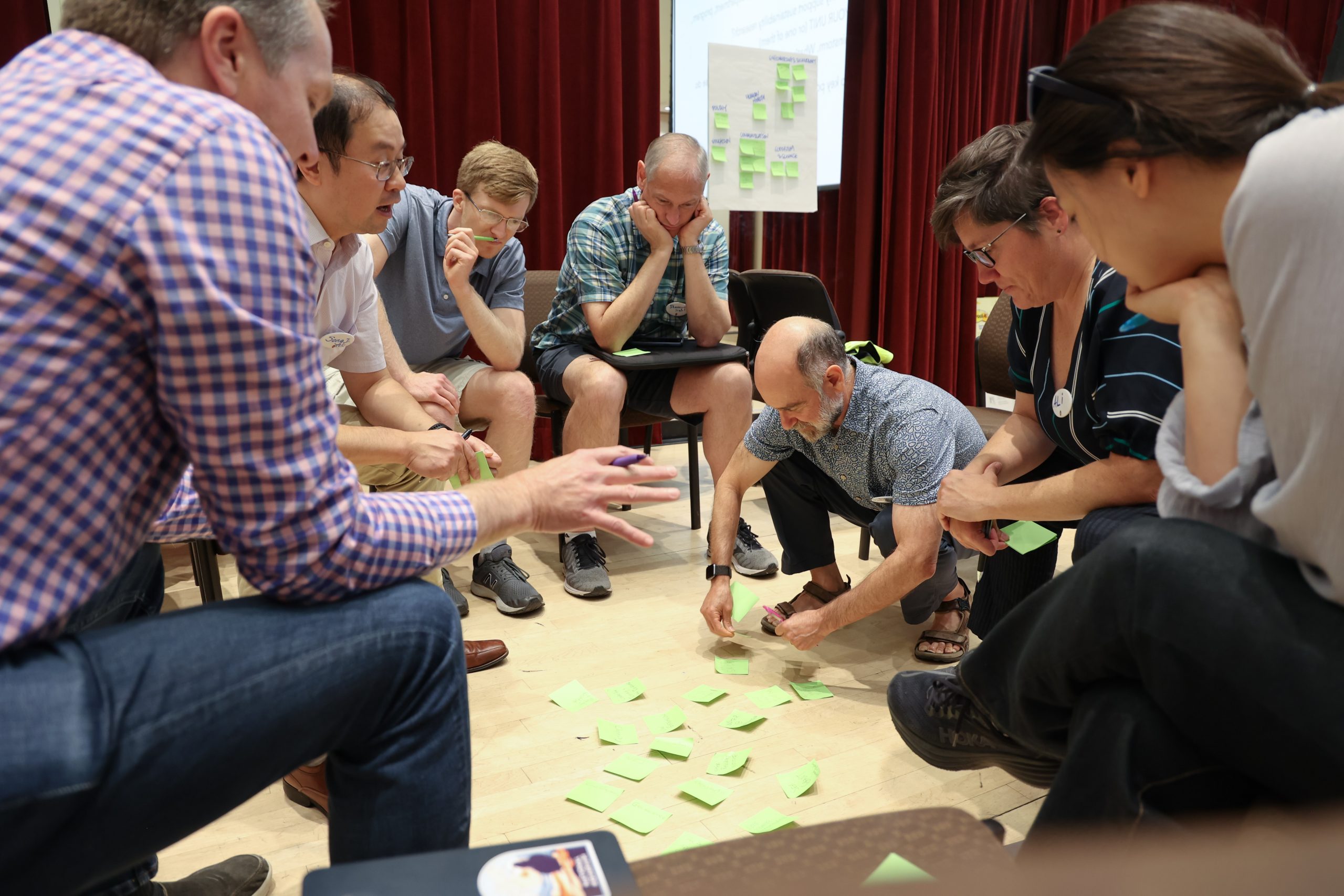
Faculty and staff share ideas during a breakout session at UW–Madison’s Sustainability Research Visioning Event, Fall 2024.
1. Research and Innovation Goal: Launch the Sustainability Research Hub by Spring 2024
- Launched the Sustainability Research Hub in January 2024; supported $205 million in proposals in FY25.
- Hosted the first UW–Madison Sustainability Research Visioning Event in September 2024, bringing together 120 UW faculty and staff from 40 departments representing 13 schools and colleges to connect on RISE-EARTH themes and discuss opportunities for advancing interdisciplinary research.
- Coordinated campus involvement in the WiSys-led NSF Forward Agriculture Regional Innovation Engine, which has been named one of 29 semifinalists for an award with potential funding of $160 million.
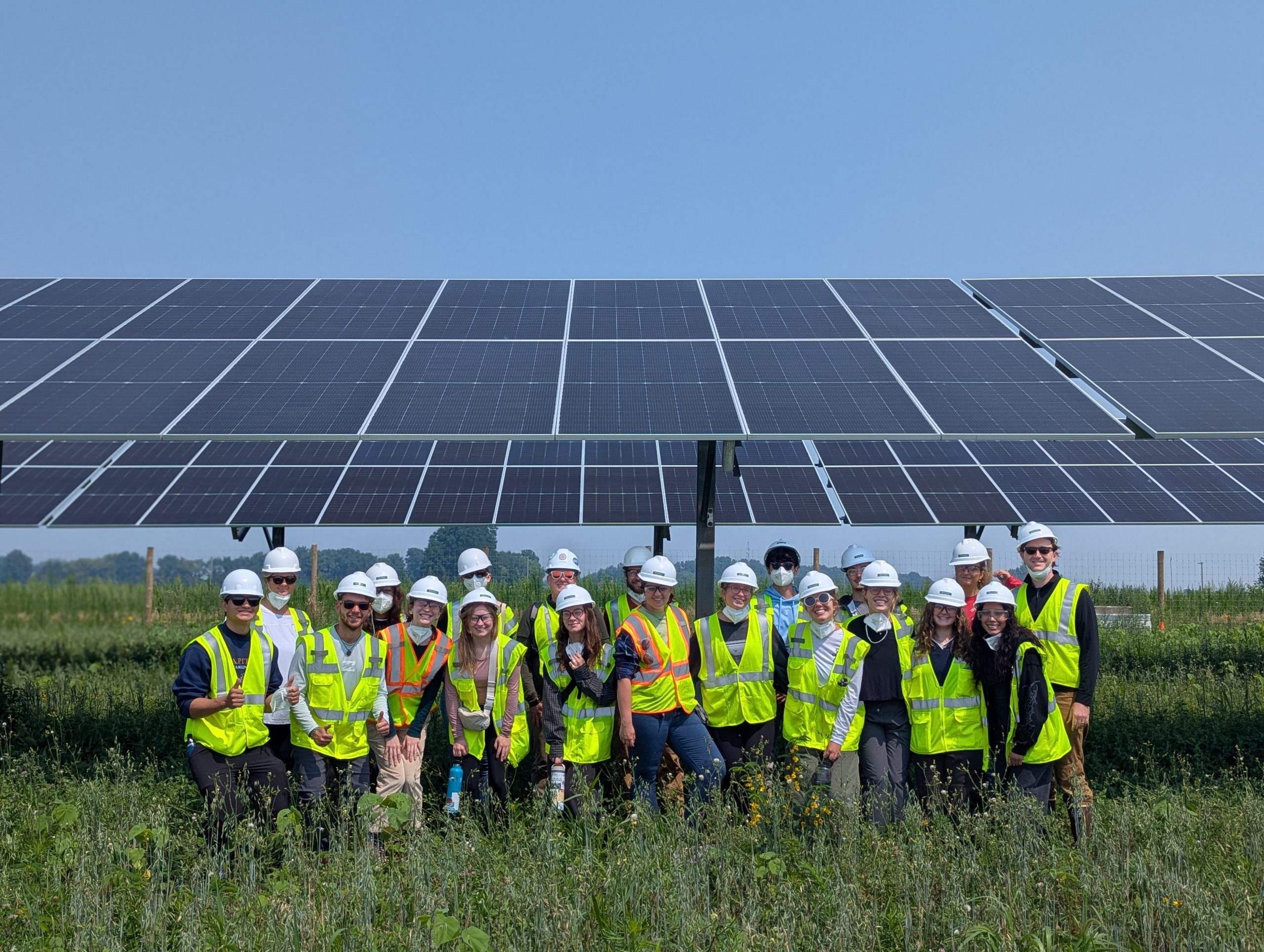
Office of Sustainability interns tour the Kegonsa Research Campus solar array, a dual-use project designed as a living laboratory for agrivoltaics research, education, and demonstration.
2. Carbon Emissions Goal: Achieve net-zero emissions by 2048
- The Utility and Energy Study, which reviews scenarios to decarbonize campus heating and cooling, is being drafted with anticipated completion later this year.
- The 2.25 MW Kegonsa Research Campus, named North American Agrivoltaics Association Dual-Use Plan of the Year, was electrified and hosts nine active research projects.
- Design underway for campus’s first net-positive energy building, the Lakeshore Nature Preserve Frautschi Center.
- Subscribed to 837MWh of renewable electricity as an anchor tenant to the Alliant Energy Community Solar Garden in Janesville.
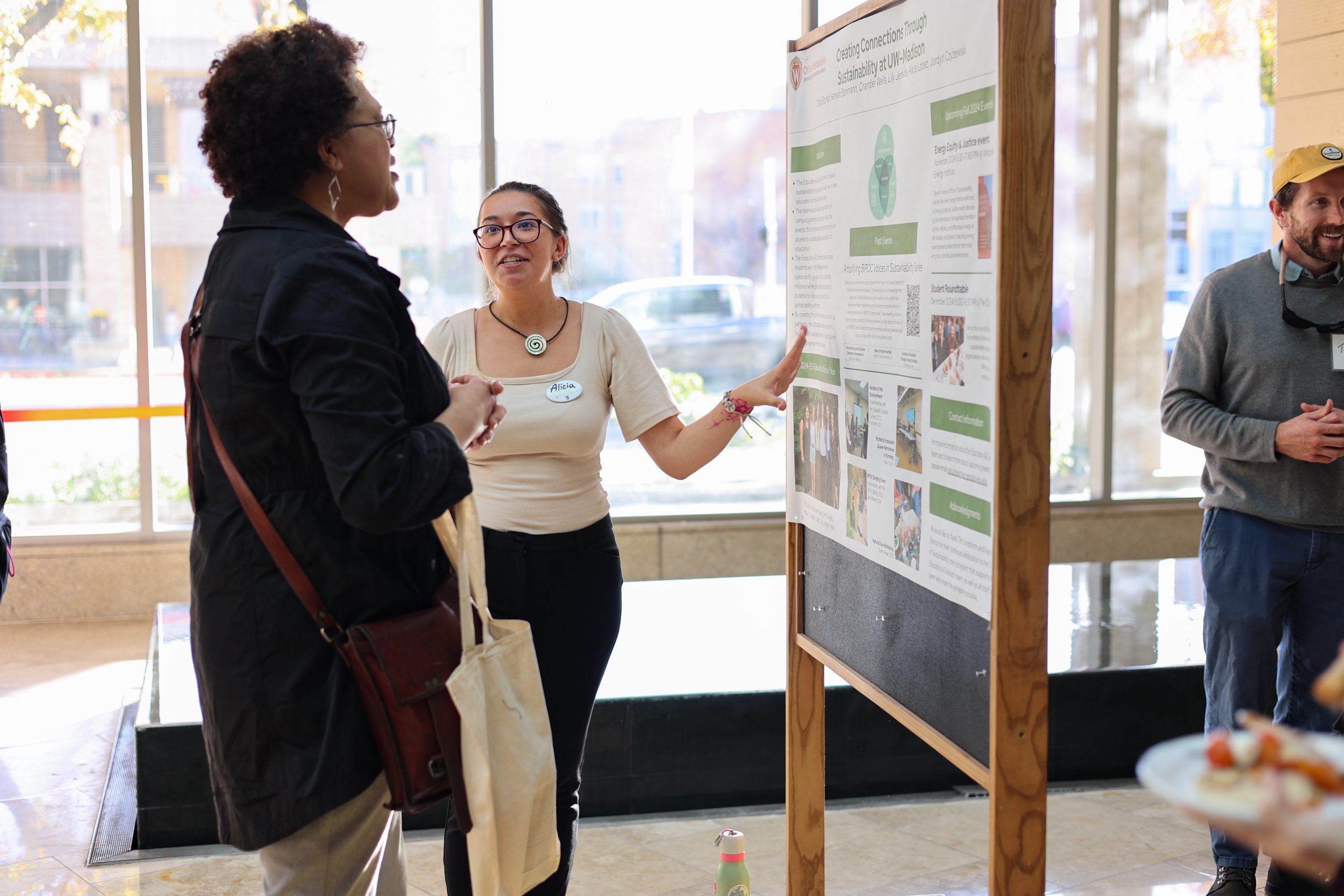
Office of Sustainability intern Alicia Lopez presents during the third annual UW–Madison Sustainability Research Symposium.
3. Educational Experience Goal: Ensure all interested students have access to sustainability educational experiences by 2030
- Launched a graduate certificate in sustainability through the Nelson Institute for Environmental Studies, which is available to any graduate or PhD candidate across campus.
- Initiated planning for a standalone undergraduate major in Sustainability and Environmental Studies.
- Hosted the third annual Sustainability Research Symposium centered on AI and Sustainability with 300 attendees, 30+ posters, 14 lightning talks, and a keynote by Dr. Sara Beery in October 2024.
- UW–Madison Earth Fest included 61 events and 55 partners. This year’s event received a Council for Advancement and Support of Education (CASE) Circle of Excellence Gold Award.

A student uses the Zero Waste Compass to check how to dispose of a plastic cup on campus.
4. Sustainable Materials Management Goal: Achieve a Zero Waste campus by 2040
- Completed draft Zero Waste Action Plan, which includes proposals for infrastructure and staffing updates, logistics improvements, and new programs and initiatives to enable our zero waste goal.
- Installed four Intuitive AI Oscar Sort units in high-traffic campus locations.
- Expanded Leanpath software to reduce kitchen food waste across all Dining Markets.
- Launched the Zero Waste Compass, an online resource to assist with proper waste disposal.
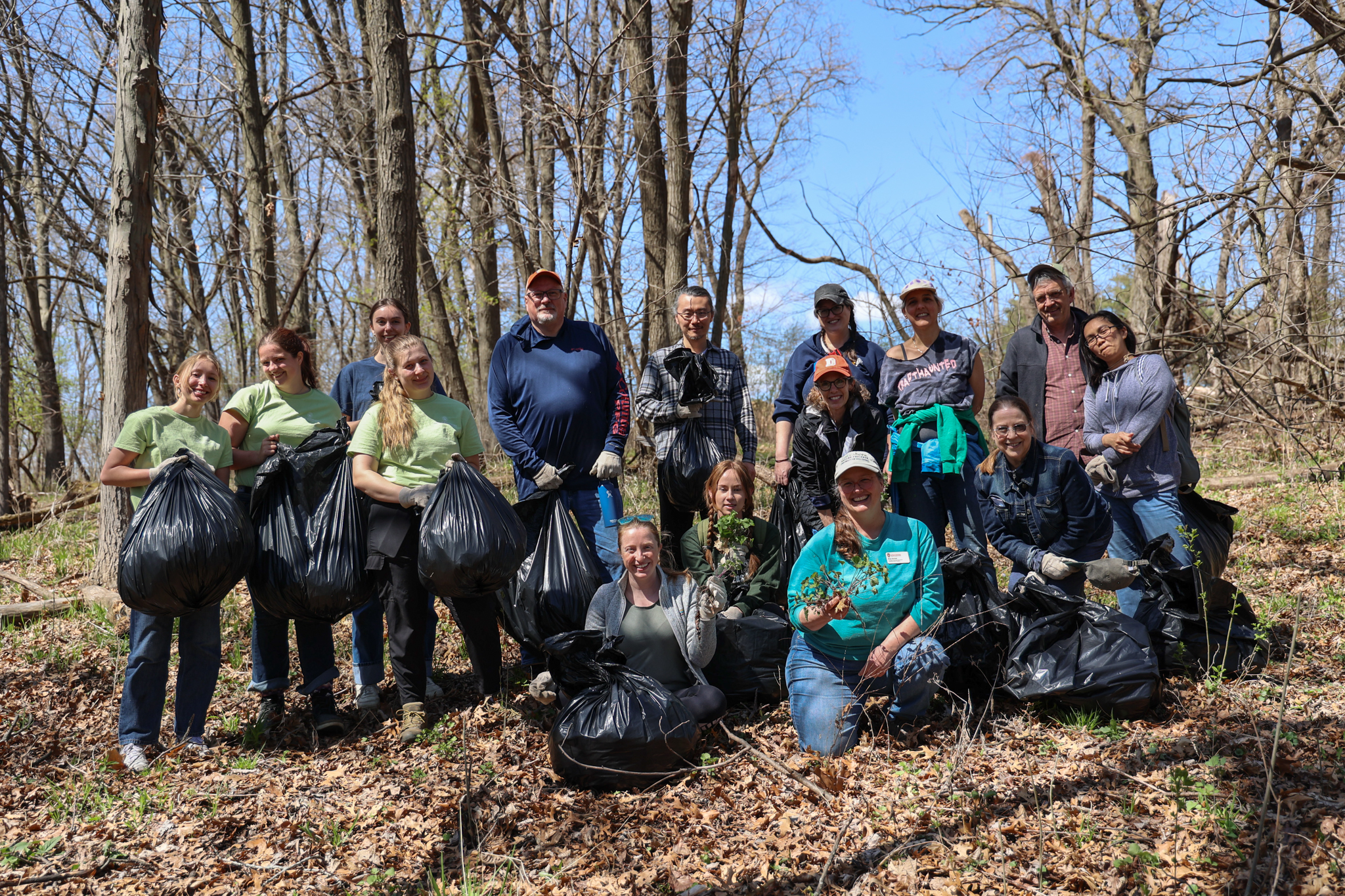
As part of the Green Office Certification Program, UW–Madison employees joined a restoration work day in the Lakeshore Nature Preserve during Earth Fest 2025.
5. Cross-Campus Involvement Goal: Achieve STARS Gold by 2025
- Awarded STARS Gold in August 2025.
- Achieved a perfect STARS rating on student life and community partnership.
- Began drafting Sustainable Building Guidelines for campus.
- Received pro bono support from Second Nature and Brailsford and Dunleavy for scope 3 emissions reduction planning.
- The Sustainability Research Hub co-launched a Research Development Community of Practice (CoP) to share knowledge, gain understanding, and build community with more than 100 other research development professionals on campus.
Support Sustainability at UW–Madison Your support helps keep UW–Madison’s sustainability leadership moving forward for students, Wisconsin, and the world. Gifts of all sizes are needed and appreciated!